 SQ
SQ EN
EN
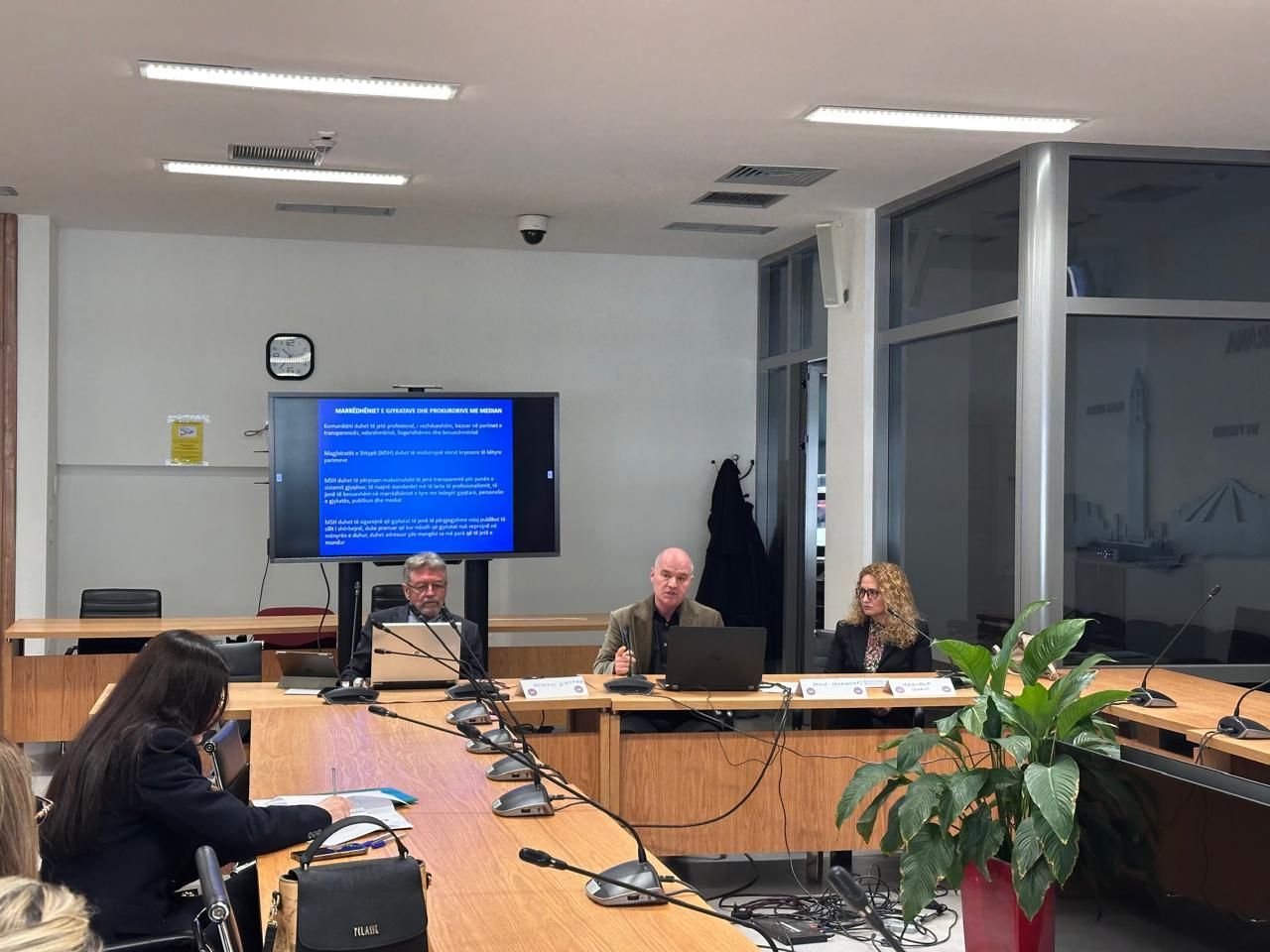
The School of Magistrates, on 5 March, 2025, had at the School of Magistrates the training activity on topic: “Relations of courts with media. The main purpose of communication. Actors that “should” and “could” communicate with media and audiences. Advantages and restrictions. Freedom of expression of judges and prosecutors. Restrictions in the freedom of expression or judges and prosecutors. Investigative secrecy aand freedom of expression. ”
This activity was led by:
Experts: Erjon Muharremaj and Perikli Zaharia
Facilitator: Marinela Nuni
The purpose of this training is:
Public confidence in the system of justice is one of the foundations where is based the rule of law. These foundations are sound when communication with public is opened and transparent. To realize this, media should become alleys of courts/prosecution offices. This training intends the elaboration and the discussion of issues that are related to the main purposes of communication, actors that should communicate with public, as well as with the freedom of speech of judges and prosecutors, including restrictions that are related with issues of ethics or with investigation secret.
The training will be realized by combining presentations (up to 20 - 30 min) with the discussion of issues brought for discussion (self-study questions, questions, answers) and case law exercises & quizzes to encourage and realize the active interaction of participants.
In this training activity will be elaborated different topics, such as:
- Purpose and the main actors of communication of courts/prosecution offices with media. The role of traditional media and the role of digital platforms of communication for the transmission of message to public. Freedom of speech and the protection of personality for judges and prosecutors in the context of the well-administration of law. Standards and international as well as national practice;
- Freedom of speech of judges and prosecutors. Limitations. “Magistrate – civilian”. The extension of the freedom of speech of magistrates; Their limitations of the freedom of speech; Freedom of speech of magistrates online; Participation of magistrates in public debates;
- Relations of magistrates with media;
- Investigation secret under the procedural provisions and provisions of the Criminal Code. What are secret investigation acts? The role of proceeding organs in the preservation of the investigation secret and the prohibition of the publication of secret and non – secret acts. Criminal offenses that are related to the discovery of acts or of secret data and their publication. Obligations of magistrates in the preservation of the judicial authority and the administration of the investigation secret in report to the freedom of speech and the right to receive information. Publications that may cause the violation of the investigation secret and of the confidentiality of investigations and the presumption of innocence according to the ECtHR, etc.
In this training activity participated judges and chancellors of the Republic of Albania.