 SQ
SQ EN
EN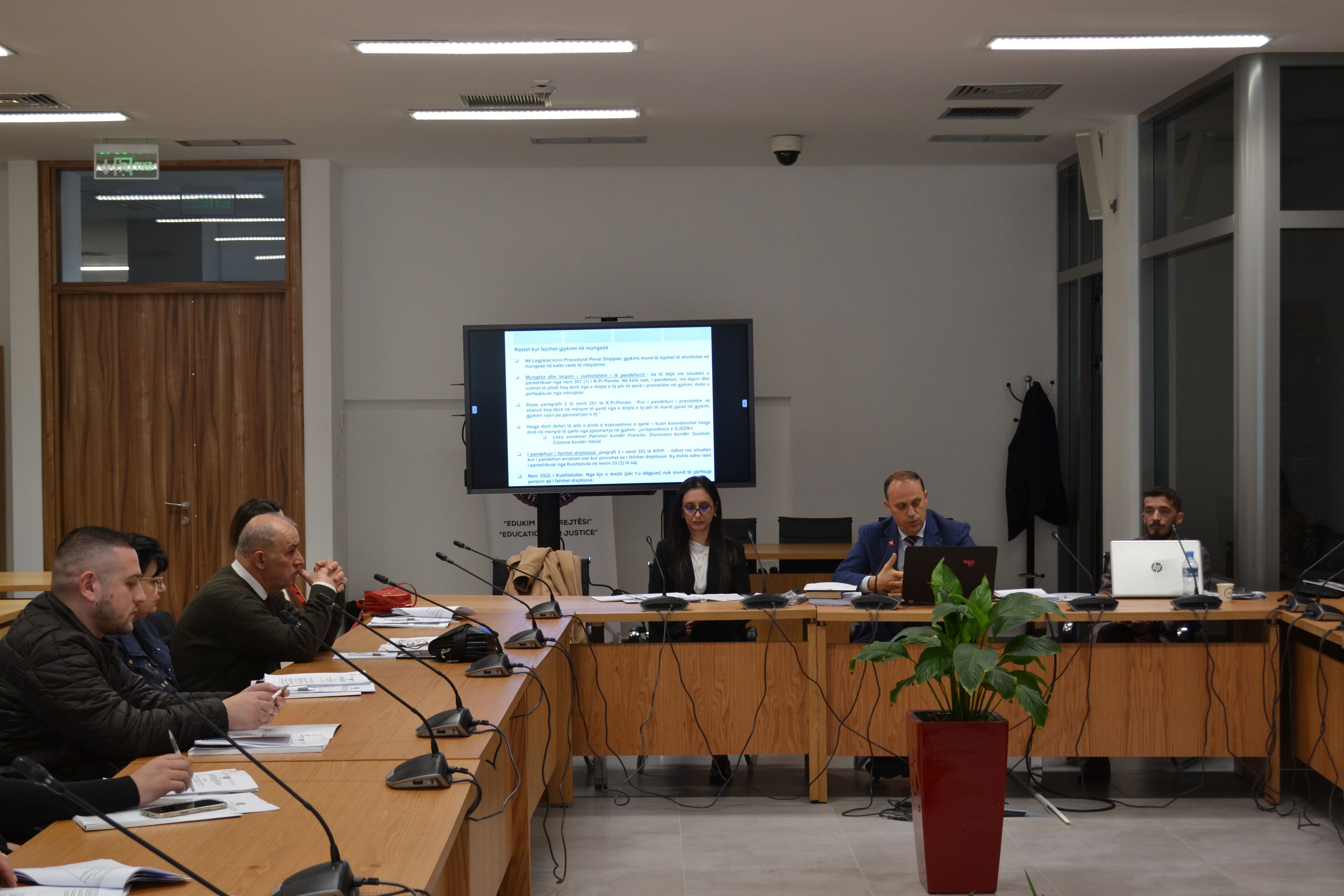
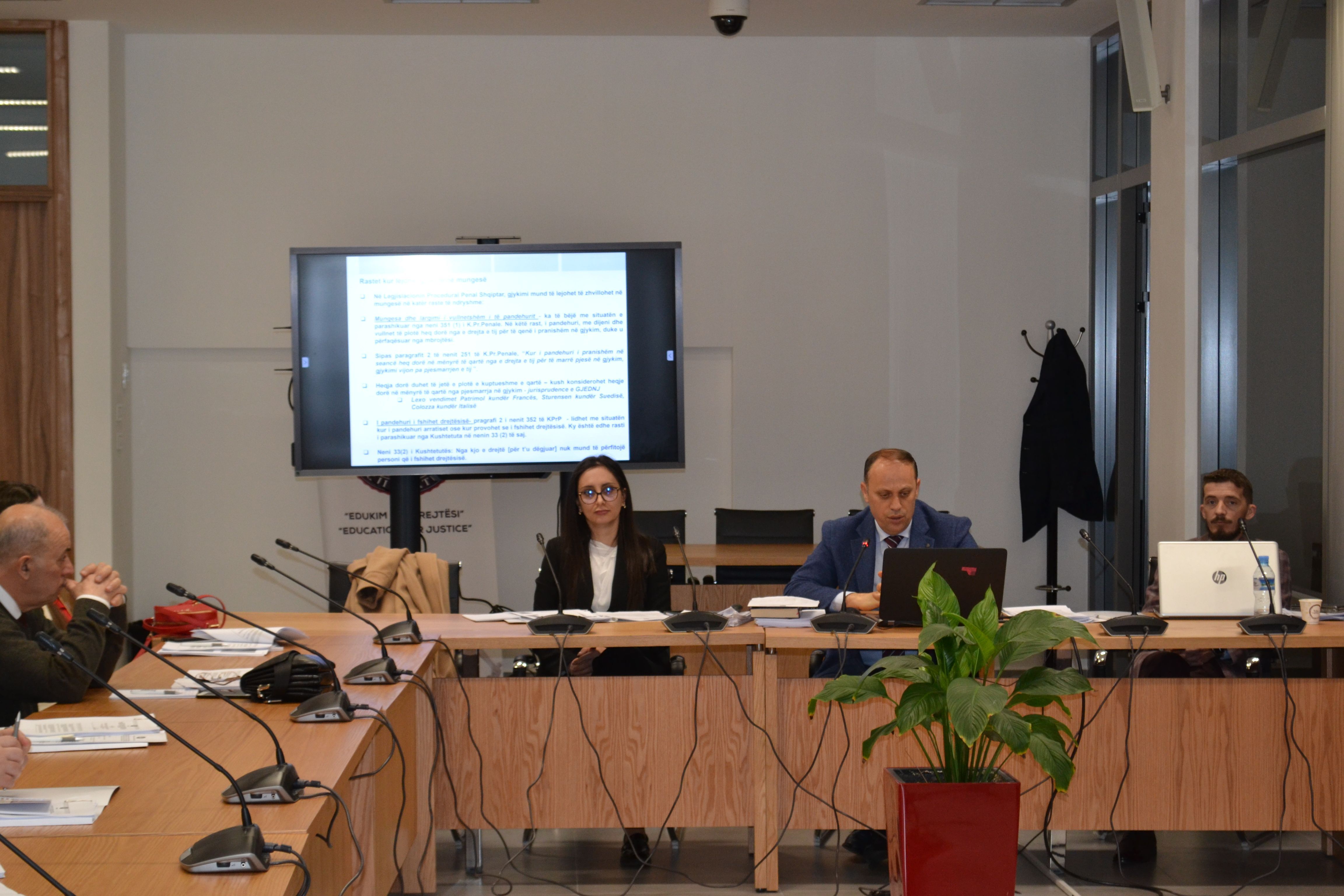
In the context of the Program of Continuous Formation, the School of Magistrates organizes on 15 - 16 March 2023 the activity on topic:
“Judgment in absentia. The difference of objective absence from the non-participation or the avoidance of judgment. Their importance in relation to review, Article 450 of the Code of Criminal Procedure. Domestic and ECtHR jurisprudence. Reinstatement within the appeal period in the case of judgment in absentia.”
The panel in this training activity is composed of:
- Experts of the School of Magistrates:
- Sandër Simoni
- Marsela Dervishi
Facilitator of the School of Magistrates:
- Artur Prenga
The training is focused on:
- On international standards and the domestic practice that has elaborated the institute of judgment in absentia.
The main focus of the training will be on:
- Legal changes of the Code of Criminal Procedure;
- Reflection to these changes of the best standards; (as well as)
- The efficiency of the enforcement of these changes in practice.
From the methodological point of view:
- The activity is going to have an interactive character;
- Participants are going to elaborate case laws and hypothetical cases.
In this activity were elaborated various topics such as:
- Conditions or criteria that the court has to consider at the moment when decides the making of the trial in absentia of the defendant;
- The making of the notification for the incarcerated, free, hidden or fled defendant who is abroad, (Articles 140-141-142 of the CPP), intending the making of an efficient notification in the view of the respect of the constitutional guarantees of the defendant;
- The invalidity of the notification and its consequences, regarding the making of the judgment in absentia of the defendant;
- The Albanian judicial practice regarding the procedure of the notification of the defendant, analyzed from the view of the making of an efficient notification;
- Standards of judgments of the Constitutional Court regarding the obligation for notifying the defendant and cases when he is judged in absentia, does our legislation guarantee the right to be judged again under the international standard?
- The approximation to the ECtHR jurisprudence, being focused on the discussion of the cases Xheraj vs. Albania, Shkalla vs. Albania, etc.;
- The appeal of the defendant judged in absentia and the application for re-establishment in terms; jurisprudence of the Constitutional Court and Unifying Judgments of the High Court;
- Cases of judgment in absentia under the Article 352 of the Code of Criminal Procedure and their distinction from the judgment in voluntarily absentia of the defendant under the Article 351 of the Code of Criminal Procedure;
- Judgment in absentia in preliminary hearing. Reflections of legal changes under law no. 41/2021;
- The understanding of the judgment in absentia based on the principle of reciprocal recognition within the EU legal framework;
- Criteria of the judgment in absentia in the context of the organization of the United Nations;
- Notification of the defendant;
- The effects of the decision of the non-finding of the defendant;
- The enlargement of the effects of the declaration of the concealment and its influence on the notification procedure;
- Judgment without the participation of the defendant under the Article 351 of the Code of Criminal Procedure;
- Judgment in absentia of the defendant who hides from justice;
- Impossibility of extradition when the defendant is abroad;
- Suspension of trial;
- Instruments to appeal the judgment given in absentia;
- What are cases of the judgment in voluntarily absentia of the defendant? What are the legal criteria on the form and content of the declaration of the will not to be part in trial? Complete and partial judgment in absentia;
- Judgment in absentia of the person that cannot be found. What are the cases and procedure of notification?
- Judgment in absentia of the person who hides justice. International standards and criteria foreseen by domestic law for the person who hides from justice. The difference from cases when the person cannot be found;
- The defendant who is abroad and his extradition is impossible. What is the procedure that has to be followed by the Albanian courts? Cases when extradition is not possible because of the legal criteria and cases when it is impeded because of the conduct of the defendant;
- Judgment in absentia in the EU framework. Standards for the judgment in absentia under the Directive 2016/243 of the European Parliament and of the Council and the framework decision of the council 2009/299/JHA;
- Should be considered as notified and judged in absentia the defendant who is not notified directly, bur a relative of whom (father) has taken the responsibility of notification?
- What are the effects of the decision of the non – finding of the defendant?
- Should the defendant resign from judgment through the hiding from justice, without being notified earlier on the trial on his regards? If the defendant is not notified efficiently for the calling to the court, could it be considered that he is informed on the trial on him?
- In cases when the detained defendant through a statement issued in IEVP declares that for personal reasons does not wish to be part in trial and asks to be represented by a lawyer who does not have an act of presentation, should it be considered that the defendant resigns voluntarily from the trial? Should continue the judgment in absentia under the Article 351? Should be legitimated as lawyer the defense lawyer called by the defendant in the statement of non-participation in trial?
- If for the defendant is not given the personal security measure, “Obligation to appear to the judicial police” a known measure, and in the moment of the trial of the case results to have gone out of the territory of the Republic of Albania, should it be considered as a hiding from justice or the court should suspend the judgment of the case on his regards?
- Should be suspended the trial for the defendant when is accused for a criminal offense committed in cooperation with another defendant who comes to the court? The judgment is suspended for both defendants or for the defendant who has not received notification?
- If by the side of the judge of the preliminary hearing is not decided the suspension of the judgment even though the defendant is not notified earlier, should be decided suspension of the trial by the first instance court? If by the side of the judge of the preliminary hearing is suspended the trial because of the non-notification of the defendant, after the passing of the one – year term of suspension and the restart of the judgment of the case in the preliminary hearing, is decided the sending to the court of the case in absentia of the defendant, should the first instance court too suspend the judgment for a one – year term if is not notified the defendant personally? Should be enforced the suspension of the trial for the accused person in cases of private charges, so in cases of accusing victim?
- The defendant who hides from justice, is this a prohibiting criterion for the acceptance of the review application?
- Material 1Download (PPT)
- Material 2Download (PPT)
- Material 3Download (PPT)
- Material 4Download (PPT)
- Material 5Download (PPT)