 SQ
 EN
- Salary structureDownload (DOC)
- CVs and salaries of officials subject to declaration under the law, their selection, competences and dutiesDownload (DOC)
- Annual civil-service admission plan for 2025Download (DOC)
Shkolla e Magjistraturës ka mision formimin fillestar dhe vazhdues të magjistratëve (gjyqtarë dhe prokurorë), të avokatëve të shtetit, ndihmësve ligjorë dhe kancelarëve në gjykata dhe prokurori me kompetencat e duhura për ushtrimin e funksioneve kushtetuese dhe ligjore në sistemin e drejtësisë me paanshmëri, profesionalizëm dhe integritet. Në bashkëpunim me Këshillin e Lartë Gjyqësor dhe Këshillin e Lartë të Prokurorisë, Shkolla ka rol të rëndësishëm në formimin profesional të administratës gjyqësore. Shkolla, nëpërmjet misionit të saj, synon të ketë ndikim thelbësor dhe të përhershëm në drejtësinë shqiptare, në shërbim të interesit publik, dhe, njëkohësisht, në përmirësimin e kulturës ligjore dhe zhvillimin e shoqërisë në tërësi.
Pozicionimi i Shkollës si organ i parashikuar nga Kushtetuta dhe si organ qeverisës i sistemit të drejtësisë, por njëkohësisht tradita dhe emri i mirë i Shkollës përgjatë gjithë viteve të aktivitetit të saj, kërkon një qasje dhe një proces sistematik e gjithëpërfshirës në mënyrë që të drejtojë institucionin drejt së ardhmes apo vizionit të tij të dëshiruar.
Planifikimi strategjik është një ndër metodat më të rëndësishme që Shkolla e Magjistraturës përdor për të përcaktuar rrjedhën e veprimeve për përmbushjen e këtij vizioni.
Për vitet e veprimit të kësaj strategjie, Shkolla ka në vizionin e saj ofrimin e standardit më të lartë në formimin e magjistratëve dhe subjekteve të tjera pjesë e veprimtarisë së saj; përdorimin me efikasitet të çdo metode inovatore në drejtim të performancës së saj; orientimin drejt BE-së përmes zhvillimit të çdo mundësie trajnimi, bashkëpunimi, shkëmbimi me këtë synim; dhe përmirësimin institucional përmes metodave të vlerësimit, llogaridhënies, trajnimit dhe transparencës.
Misioni i Shkollës dhe vizioni i saj për të ardhmen mbështeten në vlera dhe parime që i japin mundësi konkrete zhvillimit të tyre. Vlera të tilla, si: integriteti, profesionalizmi, aksesi i barabartë, dinjiteti njerëzor, bashkëpunimi, transparenca, vlerësimi dhe llogaridhënia, janë pjesë integrale e çdo procesi akademik dhe administrativ që realizohet në Shkollë.
- Functions and tasks of the School of Magistrates
In the application of law no. 115/2016, on the organs of the management of the system of justice, law no. 96/2016, on the status of judges and prosecutor in the Republic of Albania, law no. 98/2016, on the organization of the judicial power in the Republic of Albania, law no. 97/2016, on the organization and the functioning of prosecution in the Republic of Albania, law no. 84/2016, on the transitory re-evaluation of judges and prosecutors in the Republic of Albania, the School of Magistrates of the Republic of Albania realizes its activity in these directions:
- Recruitment and initial formation of candidates for magistrate, for the positions in State Advocacy, for legal assistants and for chancellors in courts and prosecution offices;
- Continuous professional formation of magistrates on duty, of state advocates on duty, of legal assistants and chancellors on duty, in courts and prosecution offices, as well as of other legal professions ;
- The field of Publications and of Scientific Research.
In the process of transitory re-evaluation of judges and prosecutors, the activity of the School of Magistrates is also oriented in the direction of:
- The realization of the test for legal advisors of the Constitutional Court, legal assistants of the High Court, of the Administrative Court, as well as legal assistants in General Prosecution Office, who are not magistrates, as well as for former legal advisors in the Constitutional Court and in the High Court, with three years of experience;
- The realization of the process of Initial Formation, through the attending of a two-year education program for the subjects provided in letter (a) of this article, who wish to enter in the system;
- The realization of the process of Initial Formation, through the attending of a one-year education program, for judges and prosecutors on duty, who do not pass the professional re-evaluation system;
- The realization of the testing for former judges and former prosecutors wishing to enter in the system, for whom there are no evaluation reports on their professional skills.
- Procedures followed by high officials of the School of Magistrates to make decisions
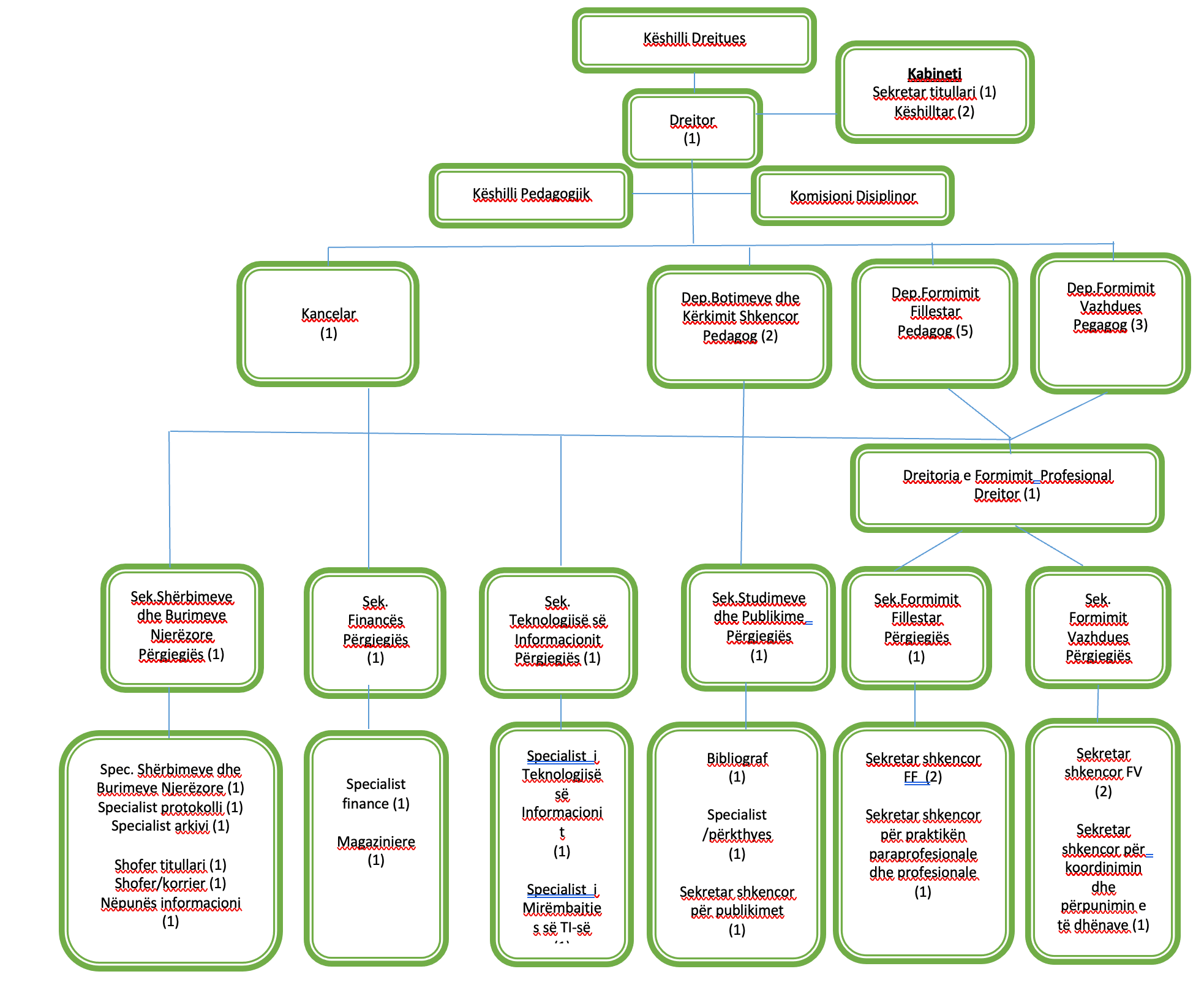
Based on law no. 115/2016, on the organs of the management of the system of justice, the governing bodies of the School of Magistrates are as follows:
- The Steering Council;
- School Director;
- Pedagogical Council;
- Disciplinary Commission.
The administration of the School of Magistrates is headed by the Chancellor, who is accountable to the Director of the School, for the task of accomplishing the financial-administrative activity of the institution. Procedures followed by high officials to make decisions are in accordance with legal and sublegal acts in force.
- Procedures and mechanisms for making a request and complaint related to the actions or non-actions of the School of Magistrates, (Including postal/e-mail address to file requests and complaints - Deadlines and manner of responding)
Every person has the right to have access to public information or to appeal to public authorities.
Based on law no.119/2014, on the Right to be Informed, in the Article 11 is established as follows, “the request for information is made in the written form and is sent by hand, by mail or e-mail, presenting the exact identity of the applicant and his/her signature.”
The sending of a request for information or the sending of a complaint to the School of Magistrates is done at the following addresses:
School of Magistrates
Rruga: “Ana Komnena”
Godina: “Poli i Drejtësisë”
Tirana
Albania
Telephone for information: 04 2468826
E-mail: info@magjistratura.edu.al
The reply to answers is performed under the ways and legal deadlines provided by the legislation in force, law no.119/2014, on the Right to be Informed.